
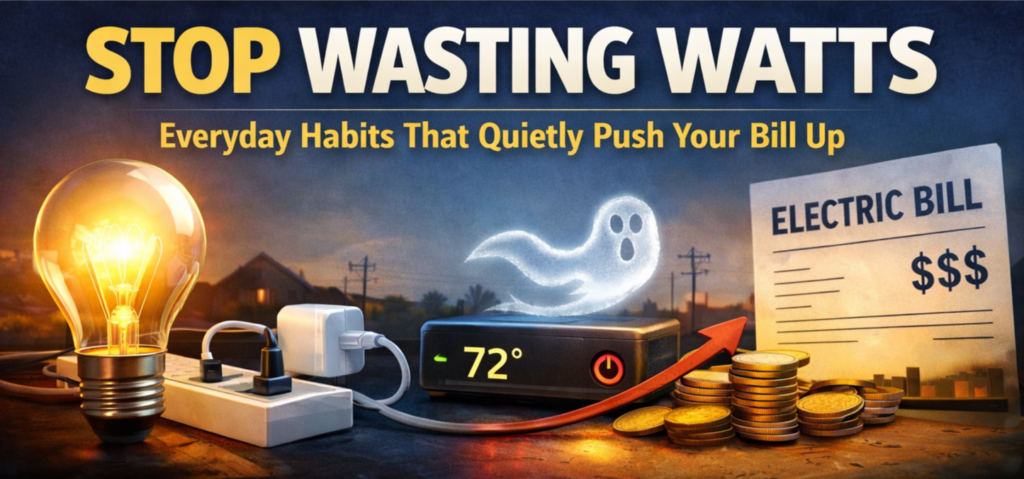
There is more to electric bills than just numbers. They show hours of fans spinning, lights flashing, and chargers buzzing while you sleep. You might not even know that some habits make you tired. The good news? Many of these habits are easy to fix — no gadgets, no major upgrades, just smarter choices and a little awareness.
In this article, we walk through dependable tips backed by real energy-saving science. You’ll learn what habits quietly hike your bill and how to stop them without losing comfort. Let’s get into it.
The Silent Power Thieves: Standby and Phantom Loads
Have you ever looked at things plugged in and thought, “It’s off, so it’s fine”? Turns out, that’s exactly where watts slip away.
What’s happening: Many devices — TVs, microwaves, chargers, consoles — draw energy even when off. This is called “standby” or “phantom” power.
Why it matters: Leaving them plugged in is like letting a faucet drip all night. Over the course of a year, phantom loads can add up to noticeable cost increases — as much as a few hundred dollars in some households.
Quick fixes
- Use power strips with off switches.
- Unplug devices when not in use.
- Plug gaming consoles or big electronics into strips you can easily cut the power to easily.
It’s simple, quick, and directly trims unnecessary power draw.
Thermostat Traps — Too Hot, Too Cold, Too Costly
Keeping your home at perfect comfort is great — but extremes are expensive.
The real deal: Heating and cooling often make up the largest portion of your electricity bill.
Practical habits
- Use programmable or smart thermostats to adjust temperatures when you’re sleeping or out.
- Don’t heat or cool rooms no one uses.
Every degree of difference can change daily consumption noticeably.
Appliances — Heavy Users You Ignore
Your washing machine, dryer, kitchen oven, and AC do a lot of work. But how you use them matters.
Common pitfalls
- Running small loads frequently instead of one full load.
- Setting water heaters hotter than needed.
Smart habits
- Wash full loads on cool or warm cycles.
- Clean filters every month.
- Use eco or energy-saving modes when available.
Small changes here feel subtle but add up fast on monthly bills.
Heating Water — Underestimated Energy Biggie
Hot water isn’t free. It’s often the second-largest part of home energy use, after heating and cooling.
Everyday savings
- Shorten showers by a few minutes.
- Wash laundry in cold water when possible.
Even trimming a little off your hot water demand cools the bill down.
Peak-Time Usage — Timing Is Money
Electricity costs can depend on when you use it. Heavy appliances like ovens, irons, and washers pull big loads.
Why timing matters: Running them during high-demand “peak” hours can cost more and strain the grid.
Better strategy
- Use dishwashers and laundry machines early morning or late evening.
- Avoid using heavy devices during peak billing hours.
Smart scheduling can reduce pressure on both your wallet and your power provider.
Cooking Wisely — Big Appliances, Bigger Savings
Your kitchen is a hot zone for energy use.
Real strategies
- When you can, use smaller ovens like a microwave or air fryer instead of big ones.
- Make a lot of food when you can.
Every minute saved in the kitchen is energy saved.
Daily Habits That Pay Off — Habit Checks You Can Do Today
Here’s a quick checklist of everyday behaviors that quietly add to power bills:
When you leave a room, turn off the lights.
Take the chargers and electronics out of the wall when you’re not using them.
Run full loads only.
Set thermostats to sensible ranges.
Clean appliance filters monthly.
Use natural light whenever possible.
These sound simple because they are. But over days and months, consistency turns small savings into real bill drops.
Final Thought — Small Changes, Big Impact
It happens when habits become second nature. You can save real money without giving up comfort by being aware, making small changes to your routines, and planning. Learn how to reduce energy consumption.
Picture your electricity bill. If you fix a few leaks here and there, the whole current changes direction. Over a year, that difference is noticeable — not just in your wallet but in your confidence as someone who knows how to manage their home wisely.